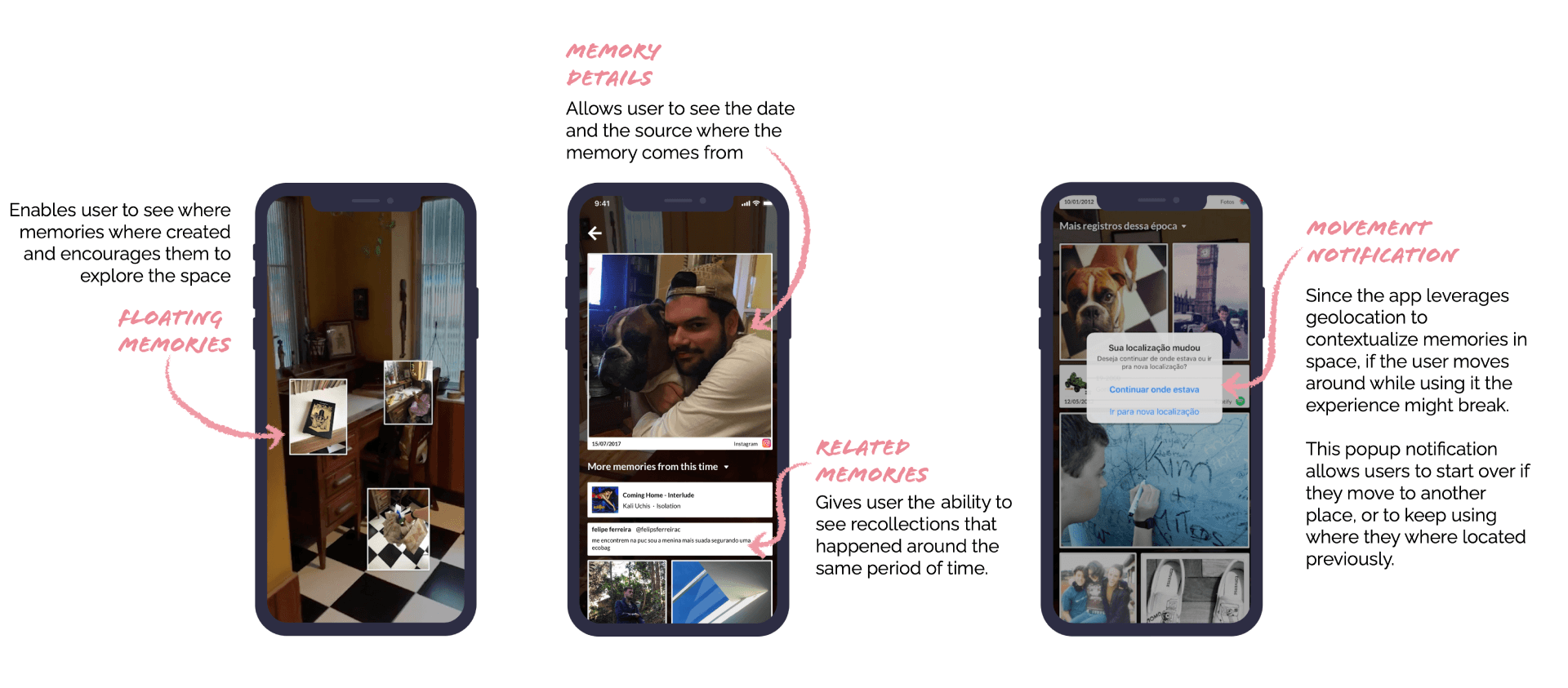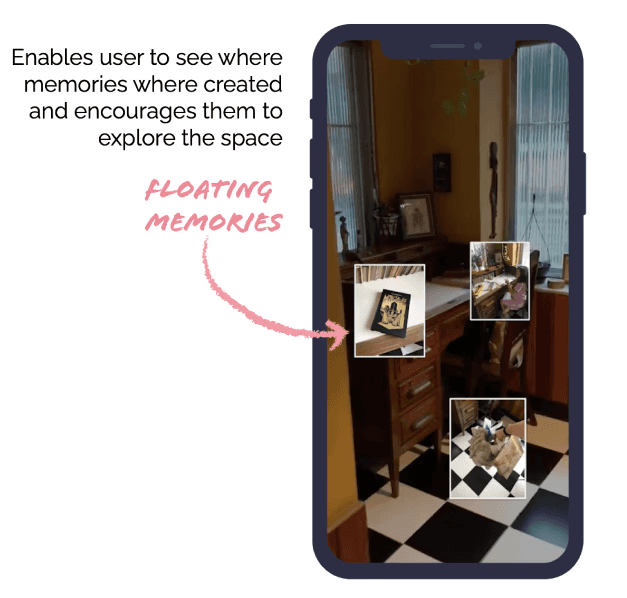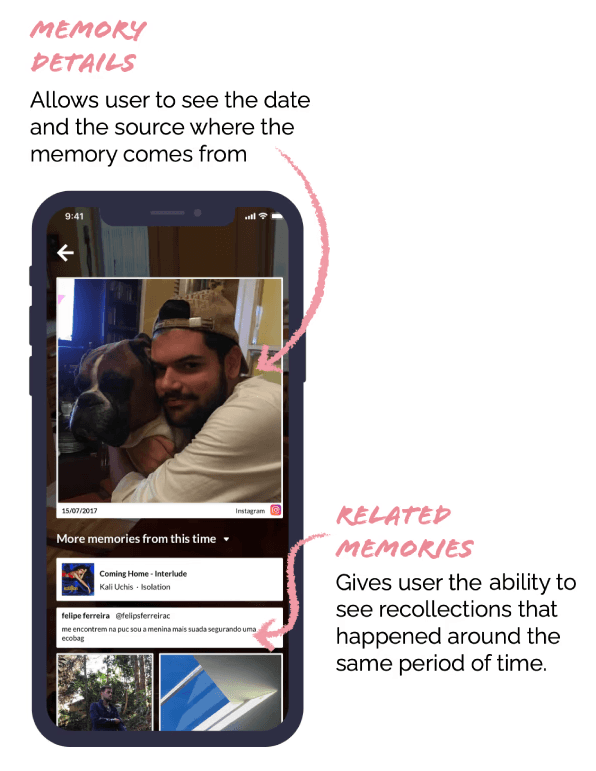
Background
Memory Lane is a concept app and my undergrad thesis project for Escola Superior de Desenho Industrial at UERJ, back home in Rio de Janeiro, Brasil. This project was developed over my fifth and final year at school, while I was also interning as a product designer for a company called ALICE.
Working with product development inspired me to take a digital approach for this project. I was also heavily inspired by a summer I spent at ITP Camp learning about very exciting possibilities in creative technology.
Goals & Methodology
The goal of this project was to create a new way of interacting with digital memories and their emotional aspects (meaning: memories that were created and stored in a digital device or platform). As someone who grew up online, I have always wondered if capturing and hoarding moments inside of devices would change our relationship to them. With this project, I wanted to maximize the feeling of nostalgia by bringing these digimemories closer to real life, as they are each day more present, now almost exclusively, in virtual environments.
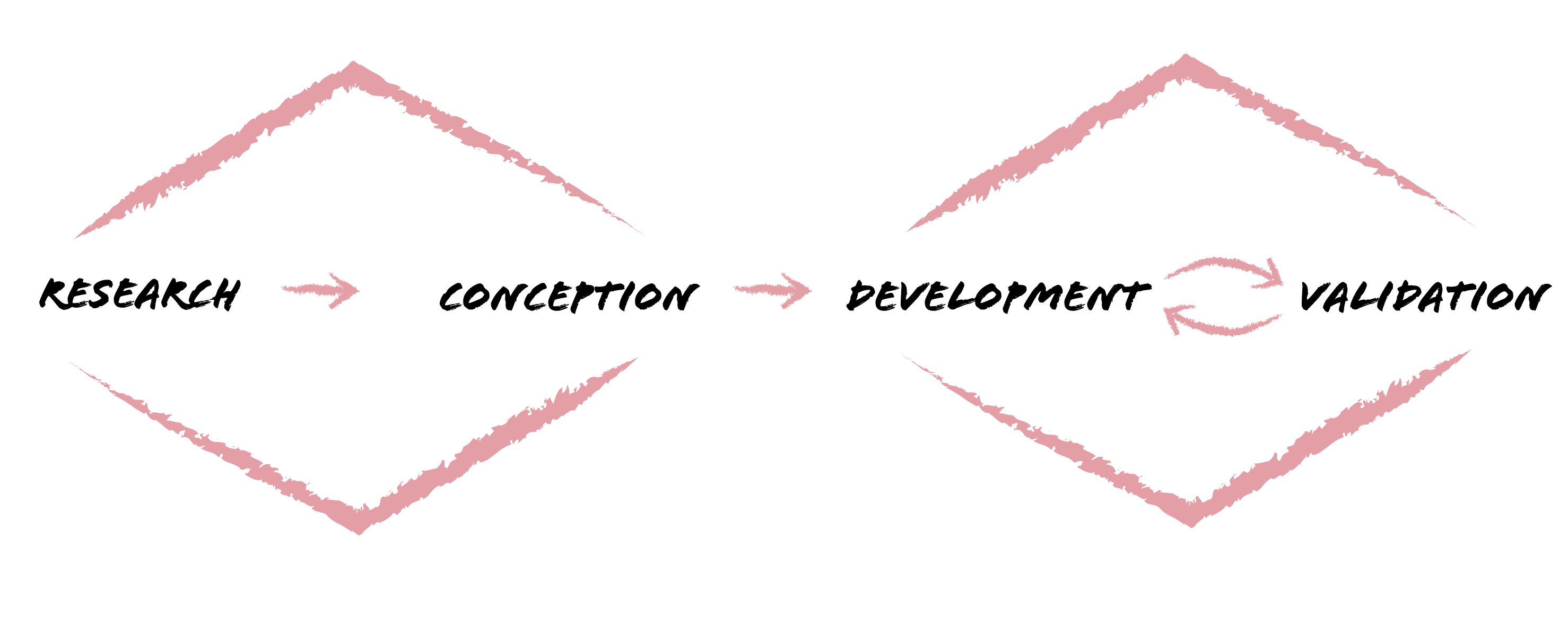
As an newly born product designer at the time, I also used this opportunity to study and use the double-diamond framework for the development of this project. The structure of < research → conception >< development ↔ validation> was also used as the guiding methodology for the paper I had to write as part of my thesis.
Concept & Insights
My first deep dive into the cybernostalgia universe consisted of two main explorations: (1) understanding the concept of nostalgia and the factors that surround it; and (2) informing myself of existing applications in the memory-sharing-storing-capturing industry.
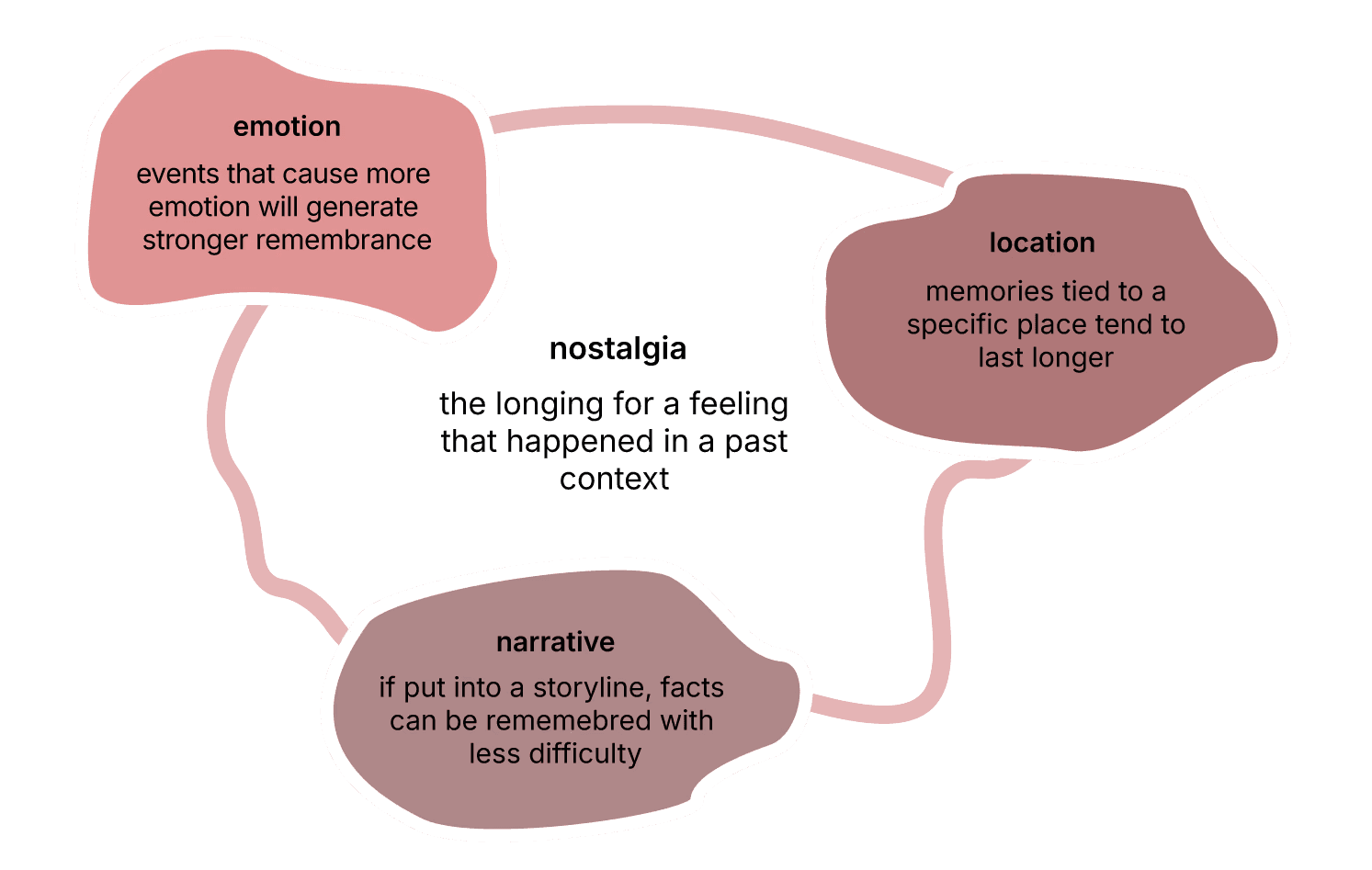
(1) keys insights from nostalgia concept map
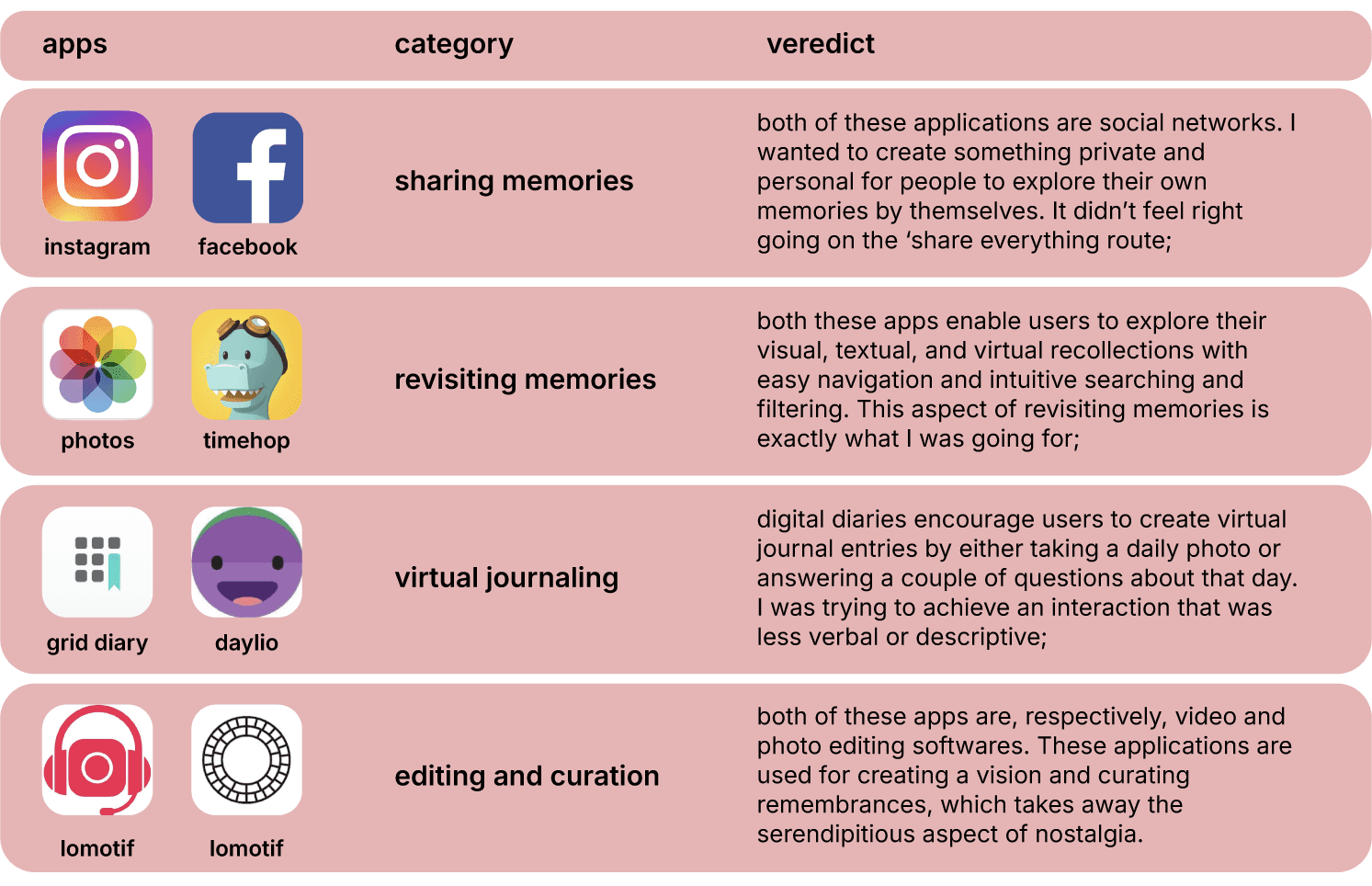
(2) benchmarking results
Explorations
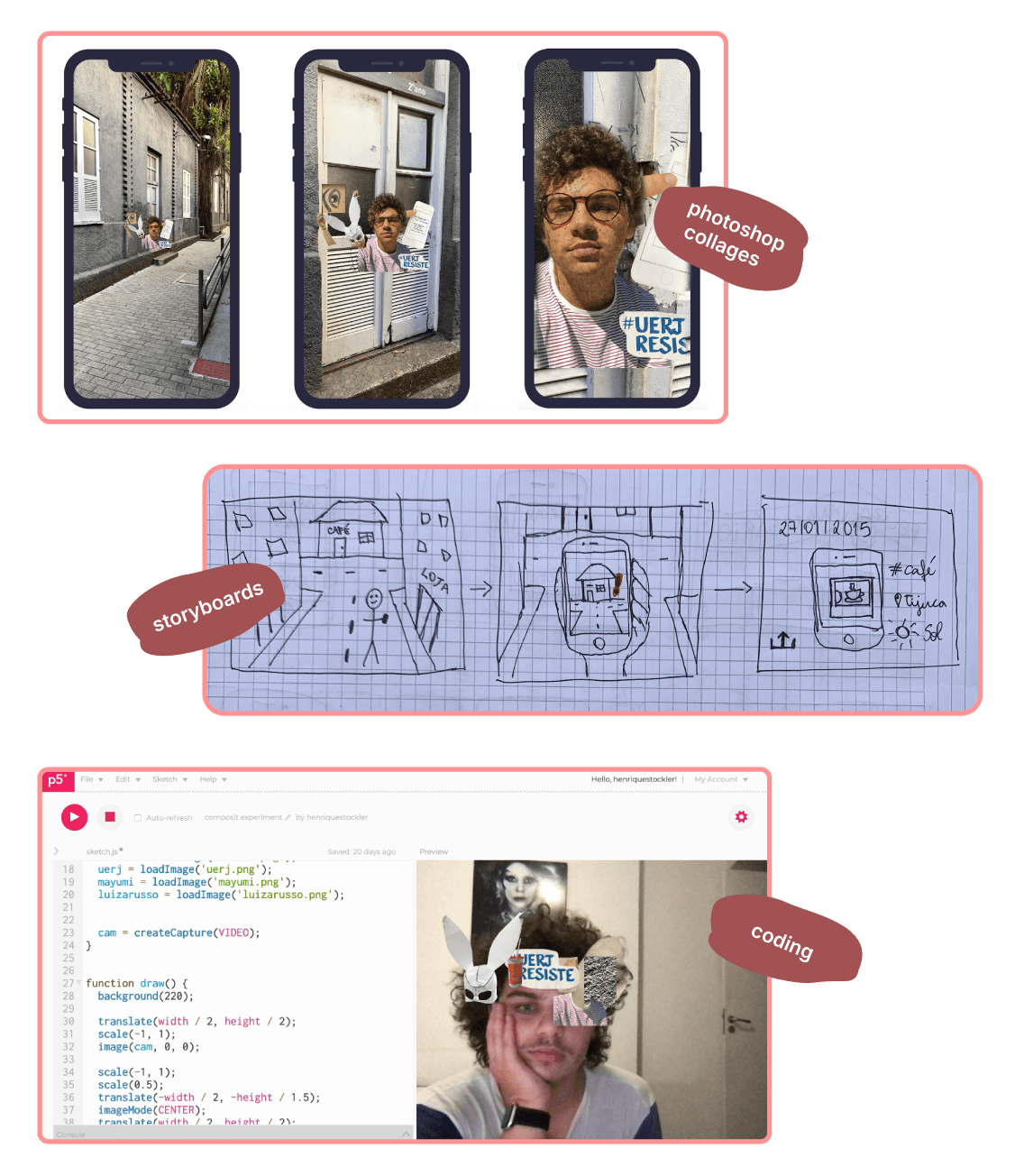
In an exercise suggested by me thesis advisor, I was asked to generate a number of alternatives and solutions that encompassed most of the insights collected during the research phase and list their pros and cons. I ended up brainstorming around ten ideas, and selected one that consisted of showing images of personal recollections contextualized on the space where they were created, through a cellphone camera.
In an attempt to visualize what this idea would look like, I sketched a storyboard with a first draft of the user journey for the main interaction. I also played around with different representations and outputs to see how the solution could look like.
User research
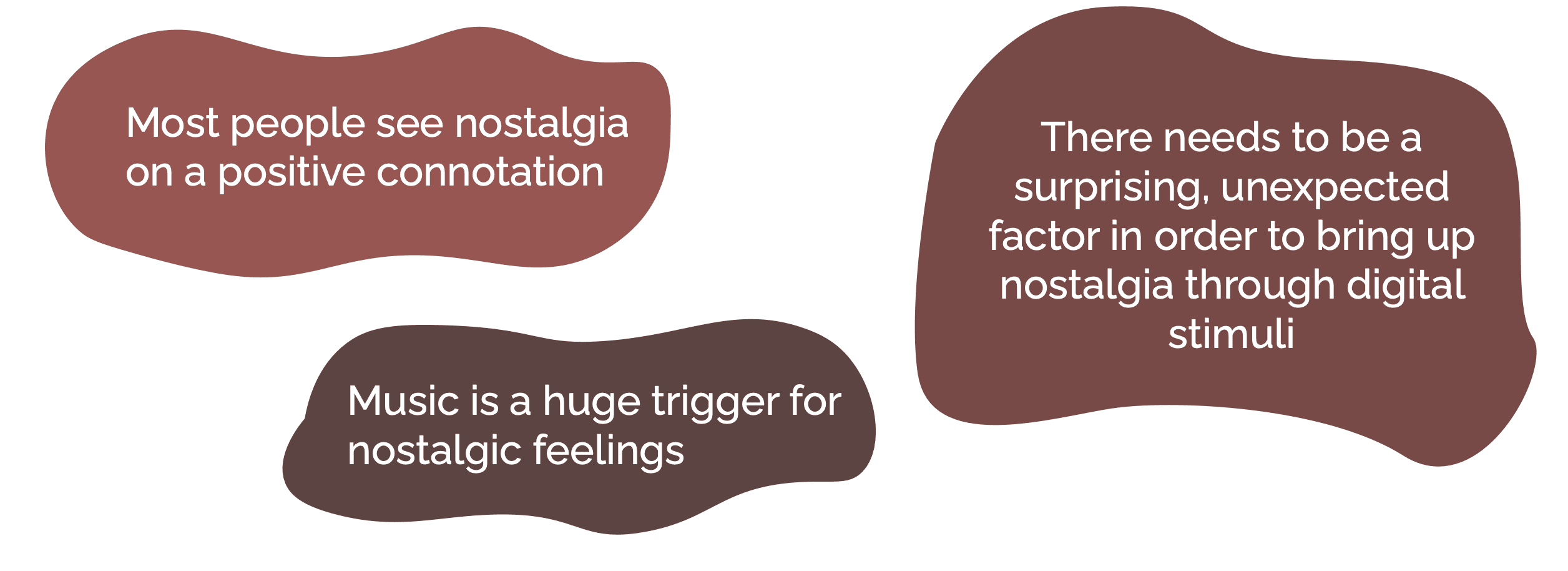
I interviewed eight potential users about their thoughts on the themes, and what they would like to have as a tool for digital memory consumption. Gathering qualitative data around their needs and desires would serve as a direction indicator for the project. Three major insights deserved to be highlighted:
Wireframes
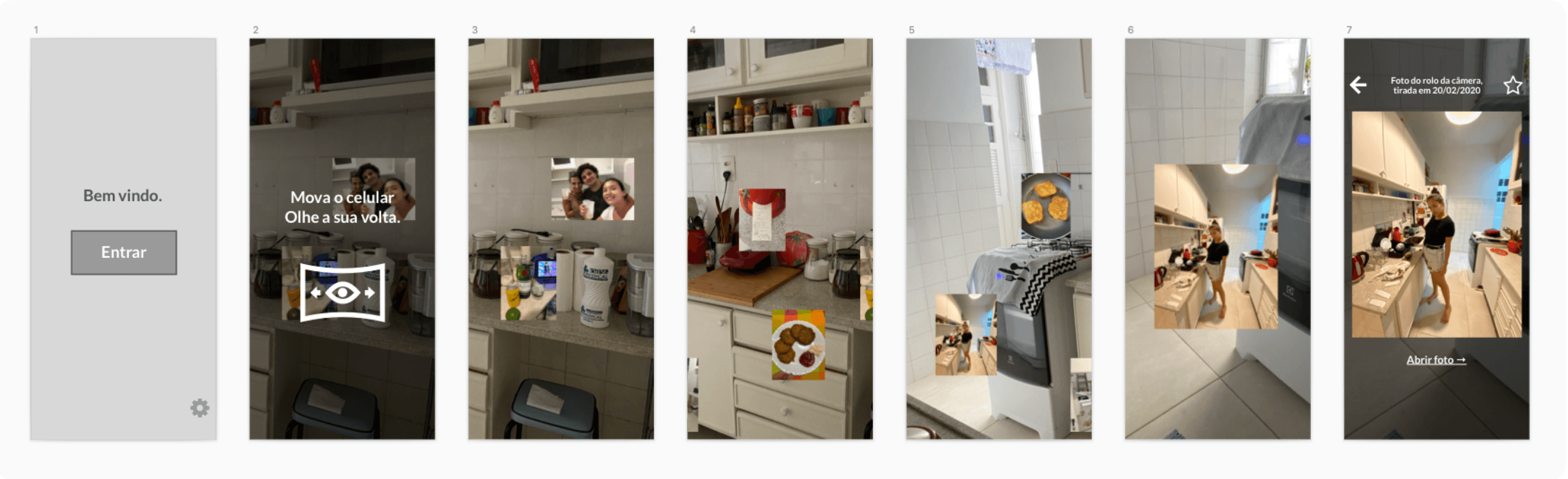
Taking all those insights into consideration, I defined an initial task flow and created wireframes of the concept. The intention of creating wireframes, besides to start giving form to an idea, was to use it to validate its concept with my thesis advisor and the other students in my class, to get their feedback before moving on to the interface.
Prototyping & Validation
One particularity of this project is that since it’s based on memories and nostalgia, in order to get genuine, emotional feedback from users, I had to create personalized prototypes that reflected the users’ memories and experiences.
I wanted to surprise the users to test the ‘unexpected factor’ hypothesis collected during the interview phase, and for that I had to collect images and social media posts from them without their knowledge. I spent hours scrolling through their profiles!
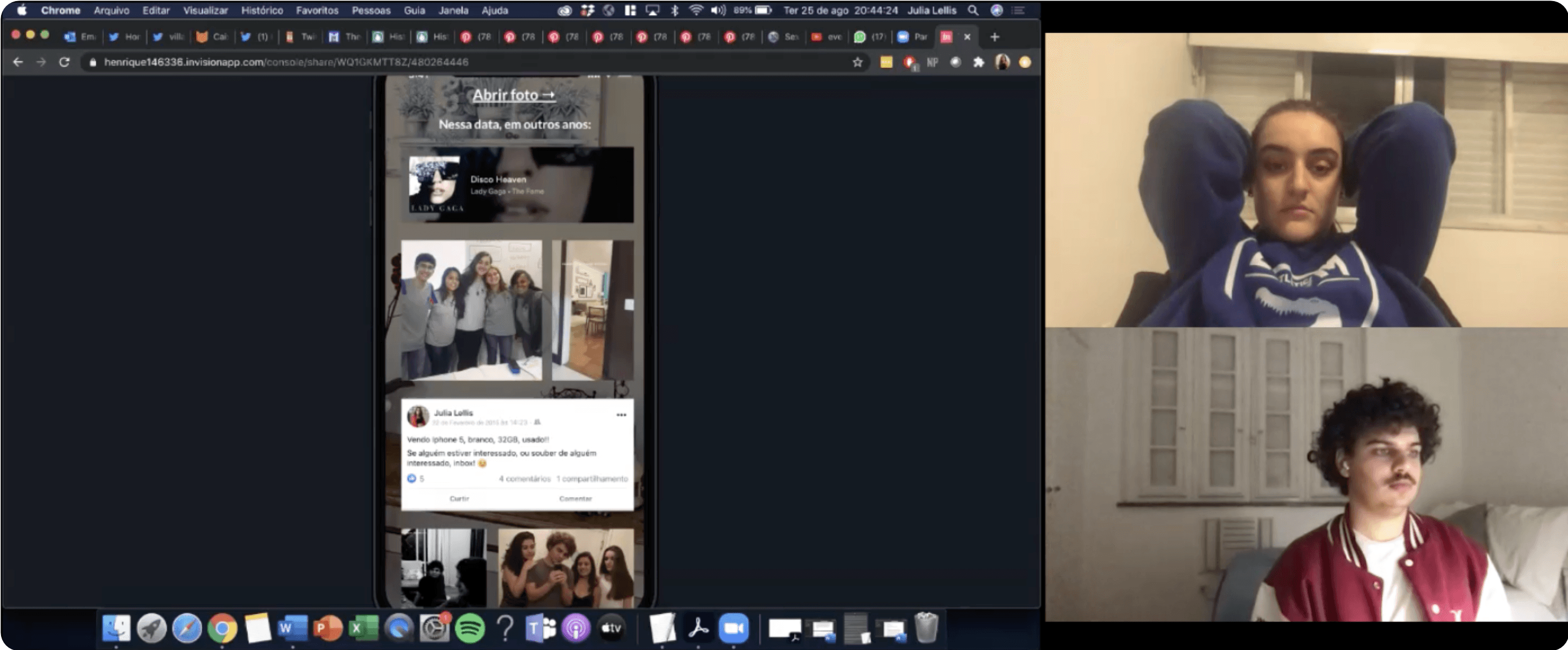
Simulating an AR
To test the interface and usability, I created high fidelity prototypes using Sketch and InVision. To simulate the Augmented Reality aspect of the interface, I added a photo as the background on the interface to simulate the camera, but users didn’t quite get that. It was impossible to convey an interaction with surrounding space by using a static prototype.
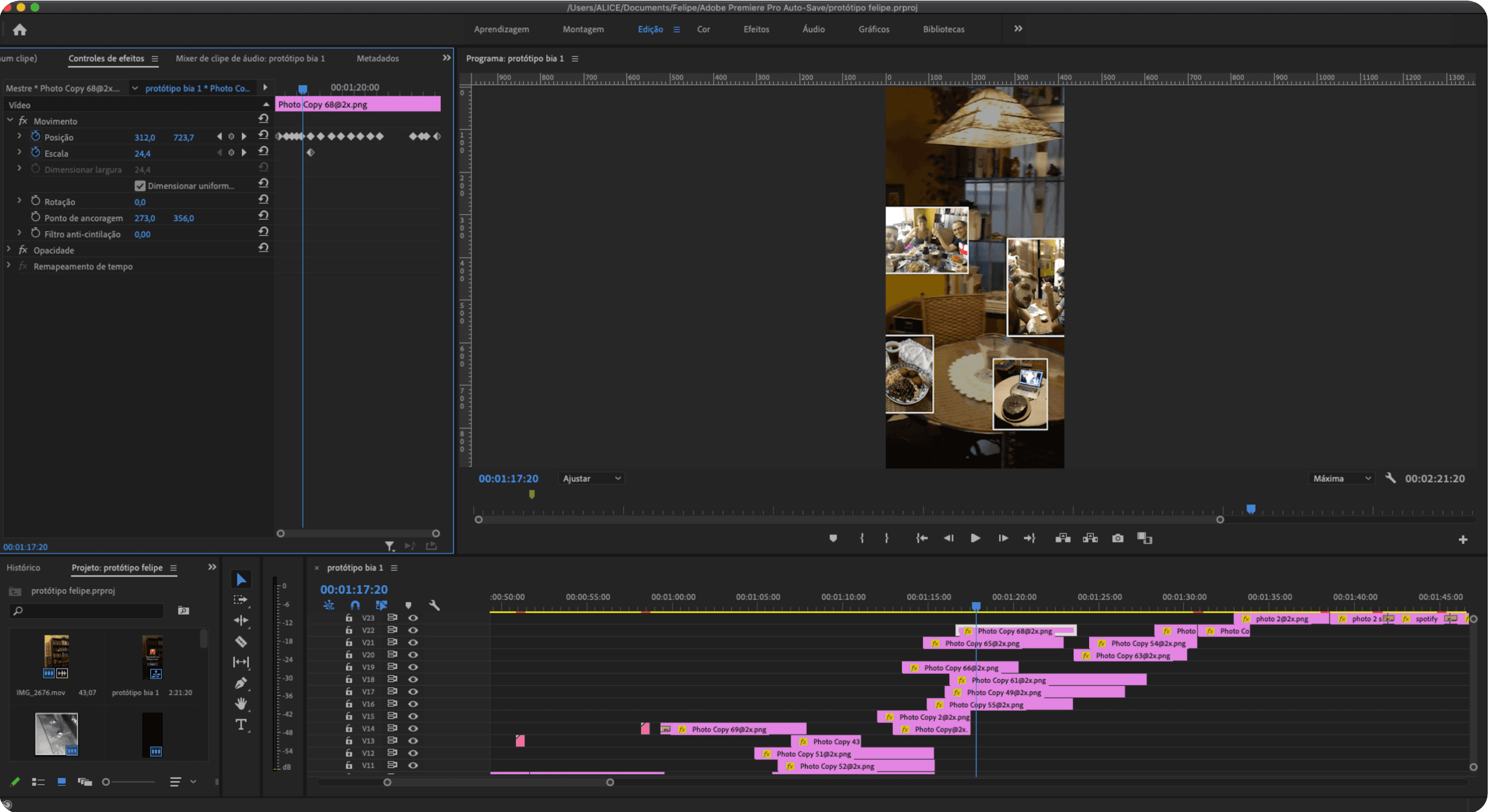
The solution to this challenge was to animate an entire prototype in Adobe After Effects, adding each element individually, and using a video as the background to simulate the AR camera effects.